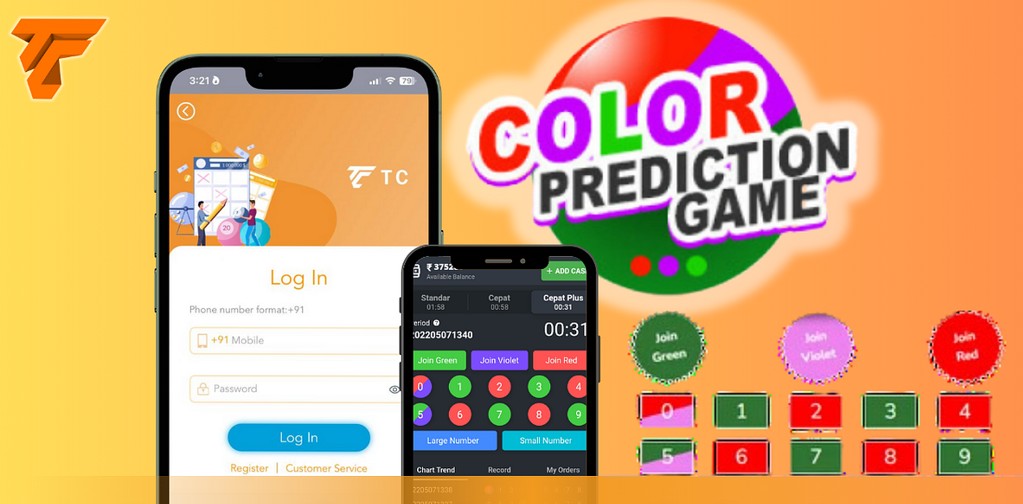
Online color prediction games have become a popular form of digital entertainment, attracting millions of participants across different regions. These games, which involve predicting the next color in a sequence or outcome, are simple in design but complex in the psychological and economic behaviors they inspire. To understand why players engage in these games and how they make decisions under uncertainty, Expected Utility Theory provides a valuable framework. This theory, rooted in economics and decision science, explains how individuals evaluate risky choices by weighing potential outcomes against their subjective preferences.
Understanding Expected Utility Theory
Expected Utility Theory is a cornerstone of modern economic thought. It posits that when faced with uncertain outcomes, individuals make decisions by calculating the expected utility of each option rather than simply considering the expected monetary value. Utility, in this context, refers to the satisfaction or value derived from an outcome, which may differ from its financial worth. For example, winning a small amount in a game may provide disproportionate happiness compared to its monetary value, while losing a large amount may cause more distress than the financial loss alone would suggest.
Application to Online Color Prediction Games
In online color prediction games, players must decide whether to place a bet, how much to wager, and which color to choose. Each decision involves uncertainty, as outcomes are typically determined by random algorithms. Expected Utility Theory helps explain why players make certain choices even when the odds are not in their favor. A player may continue to participate because the utility of potential excitement and the thrill of winning outweighs the disutility of losing. This highlights the difference between rational economic behavior and subjective utility-driven behavior.
Risk Preferences and Player Behavior
Expected Utility Theory also sheds light on risk preferences. Some players are risk-averse, preferring smaller but more certain rewards, while others are risk-seeking, drawn to the possibility of large payoffs despite low probabilities. In color prediction games, risk-averse players may place minimal bets to prolong their participation, while risk-seeking players may wager larger amounts in pursuit of significant wins. These behaviors align with the theory’s prediction that individuals make choices based on their personal utility functions rather than objective probabilities alone.
The Role of Probability and Perceived Patterns
Although outcomes in color prediction games are random, players often attempt to identify patterns or trends. Expected Utility Theory explains this behavior as an attempt to maximize perceived utility by reducing uncertainty. Even if the statistical probability of each color remains constant, players may believe that certain strategies increase their chances of success. This belief, while not mathematically sound, enhances their subjective utility by providing a sense of control and rationalization for their decisions.
Platform Design and Incentive Structures
From the perspective of Expected Utility Theory, the design of online color prediction platforms plays a crucial role in shaping player behavior. Platforms often structure rewards to maximize engagement, offering frequent small bdg win and occasional large payouts. This reward system increases the expected utility for players, encouraging continued participation. By carefully balancing probabilities and payoffs, platforms create an environment where players perceive high utility even when the expected monetary value is negative.
Limitations of Expected Utility Theory
While Expected Utility Theory provides a strong framework for analyzing decision-making in color prediction games, it is not without limitations. Human behavior often deviates from purely rational models due to psychological biases such as the gambler’s fallacy, overconfidence, and loss aversion. Behavioral economics expands on Expected Utility Theory by incorporating these biases, offering a more comprehensive explanation of why players sometimes make choices that appear irrational.
Conclusion
Expected Utility Theory offers valuable insights into the decision-making processes of players in online color prediction games. By focusing on subjective utility rather than objective value, the theory explains why individuals continue to engage in games of chance despite unfavorable odds. Risk preferences, perceived patterns, and platform incentives all interact to shape player behavior in ways that align with the principles of expected utility. Although human biases complicate the picture, the theory remains a powerful tool for understanding the appeal and persistence of online color prediction games. As these platforms continue to grow, Expected Utility Theory will remain central to analyzing both player psychology and the broader economic implications of digital gaming.
Table of Contents